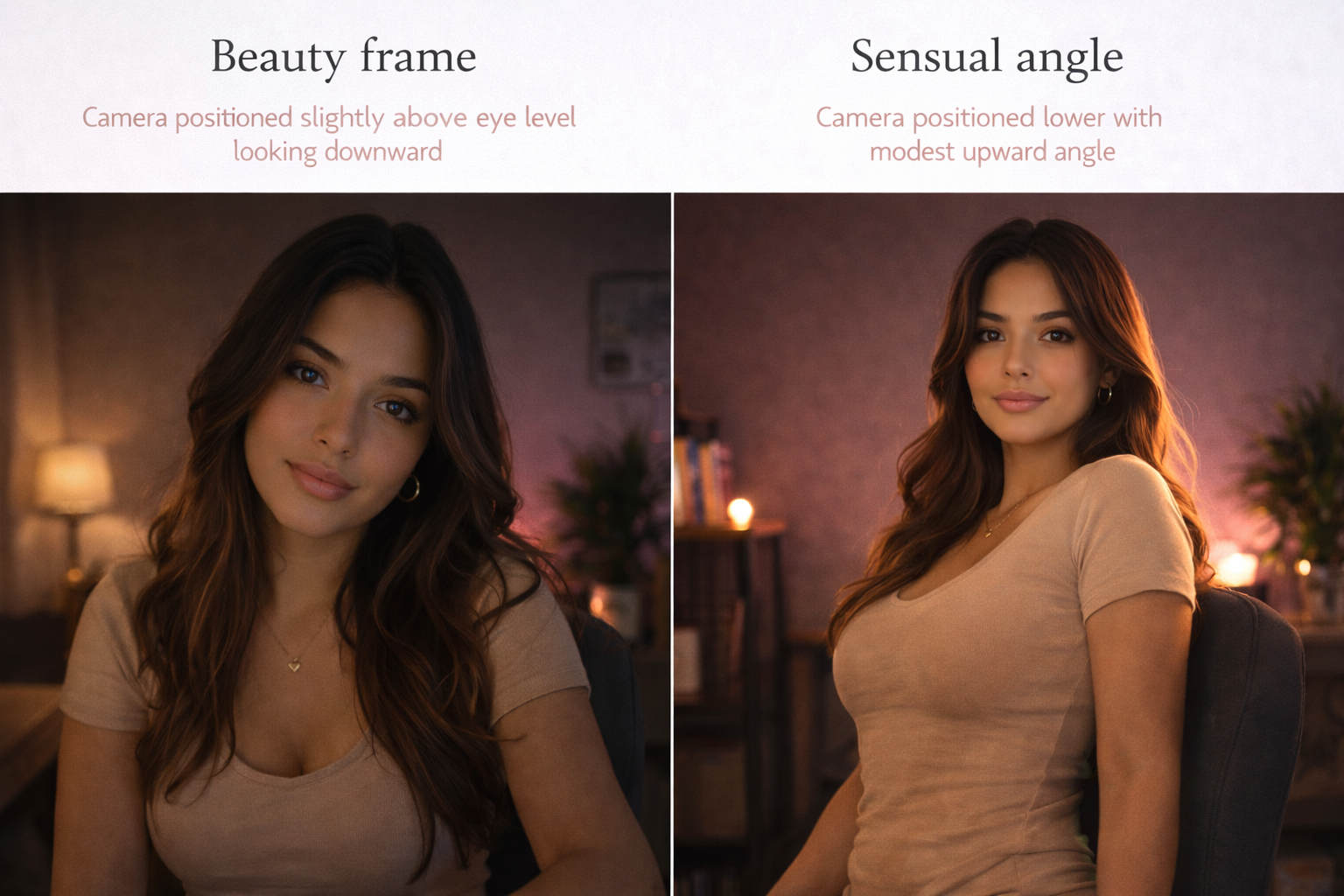
Lighting tells the camera what it is allowed to see; angle decides how much of you reads as open, confident, and dimensional. The same face can look approachable or harsh depending on a few inches of tripod height—so it pays to treat placement as deliberately as you treat your key light.
This segment is about how working models actually think about angles day to day: not geometry homework, but quick rules that help you connect with whoever is on the other side of the screen.
There is no universal “best” angle
What flatters your friend may flatten you, and vice versa. A useful definition is simpler: a good angle highlights what you want to feature and downplays what you do not want in focus . The lens can either support your silhouette or exaggerate proportions—your job is to steer it toward the first outcome.
The beauty frame: slightly above eye level
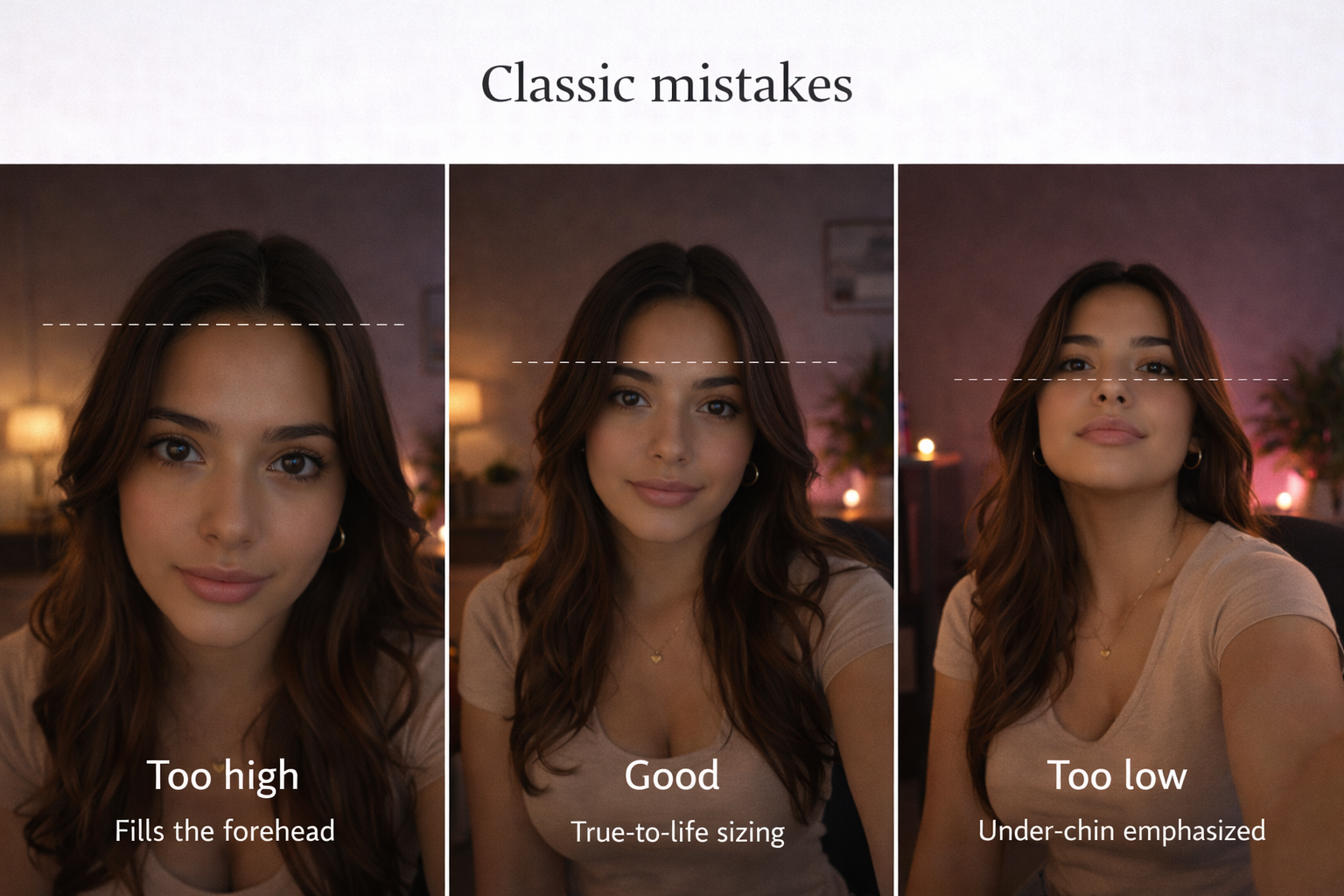
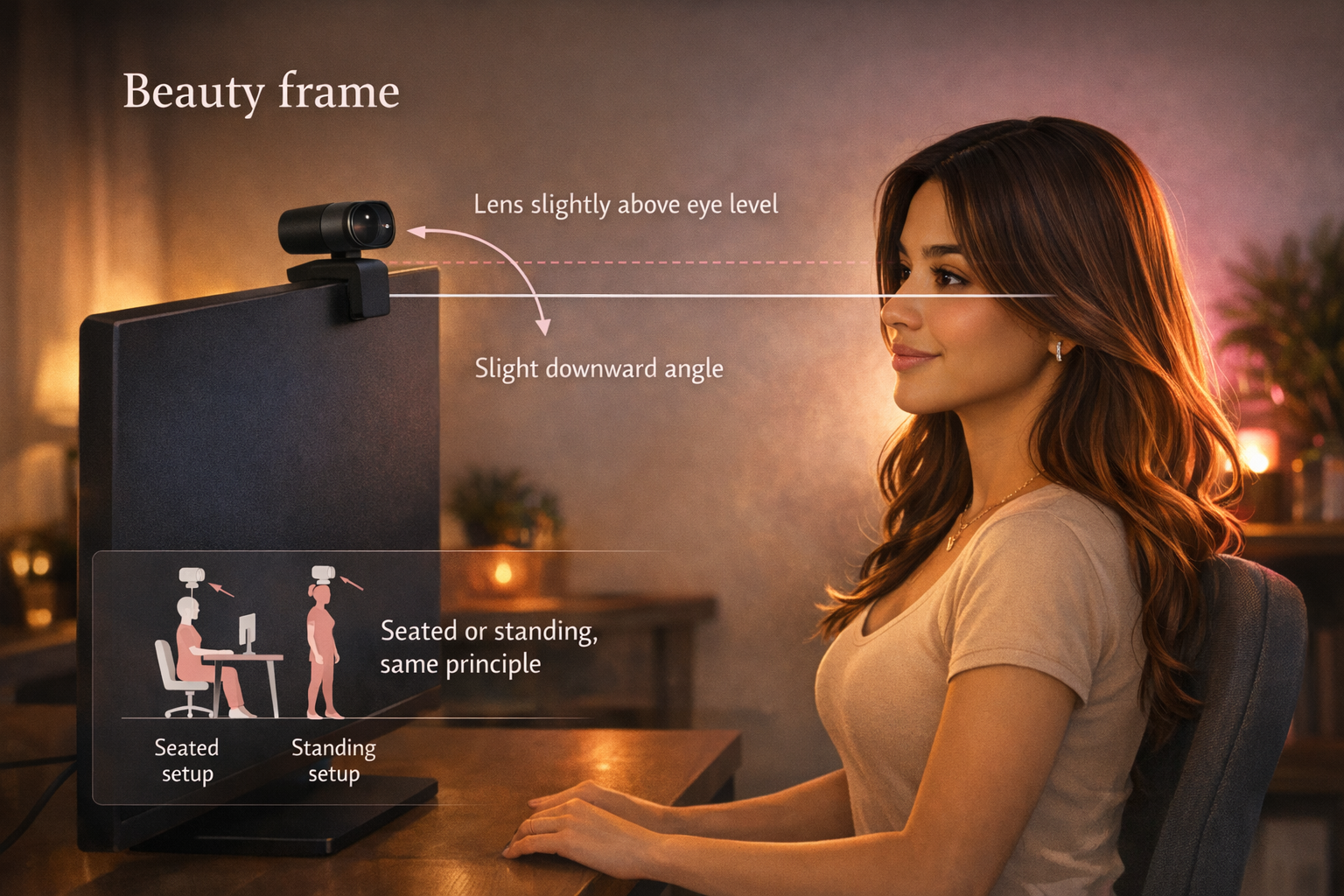
The instructor’s go-to “beauty” setup places the camera just above eye level —a small lift, not a surveillance camera in the corner. From there your features stay balanced, you can still read as “present” with the lens, and your body can read clearly when you widen the shot.
When you are seated, aim for the lens to meet your eyes; same idea standing. That baseline keeps conversation scenes natural: you are not craning up at the device or ducking under it—you are talking to the person watching , and the camera stands in for their viewpoint.
Look at the camera like it is the viewer
Technically the webcam is hardware; emotionally it is the stand-in for everyone in chat. When you speak and glance into the lens, retention and loyalty tend to improve because the room feels seen. Pair that habit with a height you know flatters you, and you get both connection and a polished silhouette .